

How to Find Email by Phone Number: 9 Proven Methods

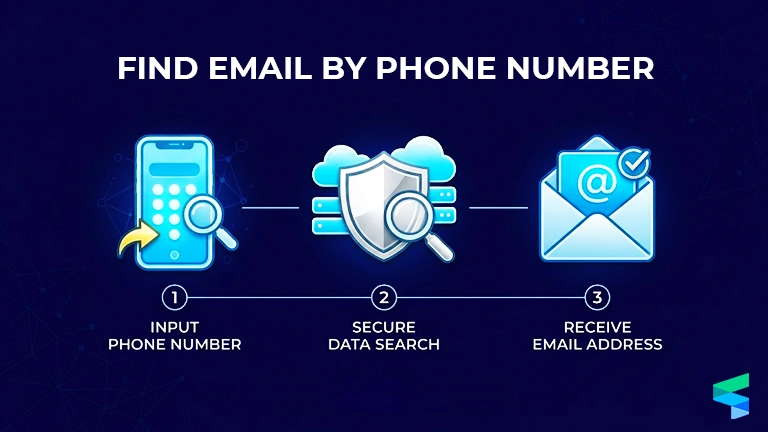
We’ve experienced this many times: a decision-maker hands you their business card at a trade show, or a warm referral drops a phone number in your inbox, but there’s no email attached. In more than seven years of running outbound for B2B teams, missing-email leads were consistently one of our top list-hygiene issues. And for a telemarketer or lead generation professional, this is one of the most common and most frustrating gaps in prospecting. A phone number keeps you limited to one channel. When you find email by phone number, it turns an incomplete lead into a complete resource for marketing. Get the email, and you can nurture, retarget, and track every interaction.
Here, we’ll discuss nine practical ways to bridge that gap, which are all tested daily by lead gen marketers, telemarketers, and cold email teams. They range from quick manual lookups to full‑scale phone number databases. We’ll also have a look at the reverse situation, in which you can find a phone from an email. Along with that, we’ll explore compliance rules that apply and ways to verify the addresses. All that keeps your sender reputation clean.
Why Email Still Matters When You Already Have a Phone Number
Cold calling campaigns don’t work if your calls don’t get connected. That’s a common problem now. Many prospects just don’t pick up calls from an unknown number. When you pair a reliable cold call with other channels, you start getting great results.
The thing is that email, SMS, and WhatsApp all reach the same buyer differently, and they support each other.
If a prospect doesn’t respond to your cold call, don’t worry. They might open your email the same afternoon. And when they see a well-timed text in their inbox, it can convince them to read the complete proposal.
This is something industry experts have tested with results. Multi-channel marketing consistently outperforms single-channel outreach, with a 287% higher purchase rate, according to WiserReview’s 2026 Omnichannel Marketing Statistics. It’s an easy way to reach buyers through mediums that they use more. That’s the practical case for pairing every phone number in your CRM with a verified email address whenever possible.
10 Proven Ways to Find an Email by Using a Phone Number
1. Get Phone Numbers Through Authentic Sources
You can find the right email addresses for your prospects only if you have access to directories with genuine phone numbers. For example, if you’re marketing to prospects in the US, a trusted USA WhatsApp number list gives you phone numbers and other relevant contact details for clients. You can use these directories for your relevant industry or target market to find the numbers for your prospects.
2. Try a Reverse Phone Lookup Directory
A reverse phone lookup begins with the number. From there, the tool checks public records, carrier databases, and directory listings for a match. Just like Google Map extractors, which pull complete details of a business from Google Maps, phone lookup directories return details. Some provide a name and address only, while more advanced tools surface associated emails and social profiles pulled from public data. These tools work reasonably well for phone numbers already entered in a public listing, though coverage and accuracy aren’t the same in free and paid versions.
3. Check the Company Website’s Contact or About Us Page
Start with company websites. Look for pages, such as “Contact Us,” “Our Team,” or “About Us”. Direct phone numbers and email addresses for employees are often listed right on those pages. If a landline or extension is already in your notes, that’s probably the fastest way to get a verified corporate email. And if there isn’t a direct listing on the site, call the main office line and speak with the receptionist. Request that they provide you with the correct email address or transfer you to the right person. Most front-desk staff help when they understand you’re just trying to reach a specific department or contact.
4. Search Social Media Platforms Directly
LinkedIn, X, and Facebook all accept phone numbers in their search fields. If the privacy settings don’t block it, a profile associated with that number appears. Most of the time, the profile’s bio or About section has an email or website right there. You’ll also find job history, recent activity, and any connections you share. That context turns your plain message into a relevant conversation.
5. Apply Known Email Formatting Patterns
Most companies structure employee email addresses the same way across the entire domain, such as “firstname.lastname@company.com” or “firstinitiallastname@company.com”. If you already have one verified email from that company, along with your prospect’s full name, you can reasonably predict the format for anyone else on the team. This is a fast technique that comes at no cost, but always run the address through a reliable email verification software before adding it to a campaign, since even one wrong assumption can produce a hard bounce.
6. Use an Email Finder Tool or Chrome Extension
An email finder by phone number tool automates all the above steps by cross-referencing a phone number or name against its own indexed database and returning a matching email in seconds. Many of these tools come as browser extensions that pull contact details directly from a LinkedIn profile or company page while you’re browsing, so you never have to stop working to search manually. These tools are a strong option between free manual research and a full B2B database subscription, particularly for smaller searches.
7. Search a Verified B2B Contact Database
For lead generation teams handling any volume, a B2B contact database is the most reliable way to find email address by phone number matches regularly. Providers like SaleLeads.net keep structured records that link verified phone numbers to business emails, job titles, and company details. It means you don’t need to search for contacts one by one. You can pull hundreds or even thousands of matched records, filtered by industry, region, or company size. These records give you what manual searches don’t: consistency at scale, with records refreshed every few months instead of pulled once from a static directory.
8. Try a CNAM or Caller ID Lookup for Business Numbers
Caller ID Name databases, or CNAM, are simply carrier‑level records that tie a phone number to a subscriber or business name. A few reverse lookup services let you query that data directly, though no service covers every number. CNAM records are present in many regional databases across the US and Canada, and how accurate they are depends on how recently a carrier refreshed its listing. For a business landline, a quick CNAM dip can confirm the company name attached to a number before you even begin an email search, saving you the time you would spend on a manual search.
9. Ask Directly, or Use a Free Email Finder for Occasional Lookups
Sometimes the best move is to simply call. Introduce yourself. Tell your reason to call them, and ask for the right email. This tactic works in B2B outreach. The person on the other end, maybe a front desk officer, knows you’re just trying to follow up professionally, so they help whenever possible. For low-volume data, a free email finder by phone number can also get the job done without a subscription. However, free plans in these tools limit the number of monthly searches and mostly rely on the same limited public sources as manual search.
Free vs. Paid Methods
| Method | Cost | Best For | Limitation |
| Google search operators | Free | One-off lookups, public figures | Time-consuming, inconsistent results |
| Reverse phone directories | Free/Paid tiers | Confirming identity before outreach | Coverage gaps, dated records |
| Company website/receptionist | Free | Corporate contacts with listed staff | Doesn’t scale beyond a handful of leads |
| Social media search | Free | Adding personalization context | Depends on public privacy settings |
| Email pattern guessing | Free | Filling gaps at a known company | Requires verification before sending |
| Email finder extensions | Free trial/Paid | Individual reps, LinkedIn-based prospecting | Per-search or monthly credit limits |
| B2B contact databases | Paid | Bulk list building, ongoing campaigns | Requires a data provider subscription or a one-time purchase |
| CNAM/caller ID lookup | Free/Paid | Business landlines specifically | Weaker coverage on mobile numbers |
If you’re sourcing a handful of contacts a week, the free manual methods are helpful for that. But when your team is building outbound lists in the hundreds or thousands, a verified B2B database becomes the more time-efficient and cost-effective route, since it replaces dozens of individual searches with one structured data extraction.
The Reverse Scenario: How to Use Email Address to Find Phone Number
Lead generation work often runs in both directions. If you’re wondering how to find phone number with email address instead, the same core techniques apply in reverse. Use Google operators to pair the person’s name with their email domain. Then check the company’s staff directory or press page. You can also paste the full email address into LinkedIn and other social platforms. Many users leave it public in their contact info.
Most email finder tools can search in both directions. You can search with a phone number to get the email, or search with an email to find the phone number. This solves the problem of having someone’s email from a webform or newsletter signup but no phone number to call them back.
How to Stay Compliant While Sourcing Emails From Numbers?
Pulling emails from phone numbers comes with responsibility. Failing to comply can cost more than a bounced campaign. Here are a few considerations that apply in most jurisdictions and are a must for you to protect yourself legally:
- Work with publicly available or properly sourced business data. Contact details you find on a company website, LinkedIn profile, or licensed B2B directory are mostly fair to use for outreach.
- You’re required to include a clear unsubscribe link in every email, per the CAN-SPAM Act. It’s not just a recommendation, but a law. (Note: We just provide general information only, and it doesn’t replace advice from your own legal counsel. Consult your own counsel for compliance that fits your jurisdiction and use case.
- Keep cold calling within TCPA and Do-Not-Call rules if you’re pairing your email outreach with a phone sequence, since the compliance requirements for calls and emails aren’t the same.
When in doubt, sourcing your email addresses from phone numbers through an established, compliance-aware data provider is safer than getting a list from scraped or unverified sources. It’s because reputable providers build their records by following legal data collection practices.
Bringing It Together
There isn’t the same approach for finding an email from a phone number. It depends on the volume and the amount of time your team can spend on search. For a few lookups across the Internet and other sources, Google operators, social searches, and a free email finder are perfect.
And if your team runs outbound campaigns regularly, a verified B2B contact database really changes things. You stop second‑guessing the data. Compliance stays in check. Without extensively searching for details, your reps can directly start talking to leads. Add routine verification and a compliance checklist to whatever method you choose. It grows your pipeline and keeps your deliverability safe.